Alevism
Alevism: A Heritage of Humanity on the Path of Truth
Alevism is a unique faith, philosophy, and way of life rooted in love, justice, equality, and human dignity. Nourished by the soil of Mesopotamia and Central Asia and matured in Anatolia, this teaching is historically referred to as the “Path of Truth” (Hakk Yolu) or the “Path of Reality.” It blends the essence of Islam with humanistic values and a universal moral code. Alevism is not merely a religious interpretation; it is a living cultural treasure with its own music, literature, social solidarity model, and liberationist structure.
The Pillar of Faith: Hakk-Muhammed-Ali
At the center of the Alevi faith lies the trinity of “Hakk-Muhammed-Ali.” This concept is a mystical “unification” (birleme), entirely distinct from the Christian doctrine of the Trinity. It represents the unity of God (Hakk), the prophethood of Muhammad (Nübüvvet), and the spiritual guardianship of Ali (Velayet) as a single whole. In Alevi belief, Imam Ali is the “Door of Knowledge,” the symbol of justice, and the spiritual leader carrying the testament of the Prophet Muhammad. The deep love and devotion for the Ahl al-Bayt (the Prophet’s Family) and the Twelve Imams form the emotional and historical backbone of this faith. In particular, Imam Hussain’s honorable stance against the tyrant Yazid at Karbala is the greatest symbol of resistance against injustice in Alevism.
The Essence of Morality: “Be Master of Your Hand, Your Tongue, and Your Loins”
The ultimate goal of worship in Alevism is to become an “İnsan-ı Kamil” (The Perfect/Mature Human Being). On this journey, the person is guided by the principle: “Eline, beline, diline sahip ol” (Be master of your hand, your loins, and your tongue). This brief but profound expression summarizes the fundamental ethical rules required for a society to live in peace:
Master of your hand: Do not take what you did not put down (do not steal, do not commit violence).
Master of your loins: Do not commit adultery; protect your honor and integrity.
Master of your tongue: Do not lie, do not gossip, and do not hurt anyone with your words.
Those who violate these rules are considered “düşkün” (fallen/outcast) and are marginalized from the community. This serves as Alevism’s internal mechanism for justice and social control.
The Four Doors and Forty Stations
Spiritual development in Alevism is explained through the teaching of the “Four Doors and Forty Stations,” systematized by Hacı Bektaş Veli. A seeker passes through these stages:
Sharia (Şeriat): Basic religious rules and social laws.
Tariqa (Tarikat): Learning the intricacies of the “Path” by connecting to a spiritual guide (mürşid).
Marifa (Marifet): Finding God within one’s own essence; the stage of wisdom and gnosis.
Haqiqa (Hakikat): Becoming one with God; reaching the ultimate reality.
The purpose of this teaching is to transform a person from “rawness” to “maturity” and to equip them with universal love.
Places of Worship and Rituals: Cem and Semah
The fundamental ritual of Alevism is the “Cem,” performed in a “Cemevi” (House of Gathering). A Cemevi is not just a place for prayer; it is a “Square of Justice” where those at odds are reconciled, social problems are discussed, and “Consent” (Rızalık) is obtained from the community. Everyone who attends the Cem is called a “Can” (Soul); there is no distinction between rich and poor, or man and woman.
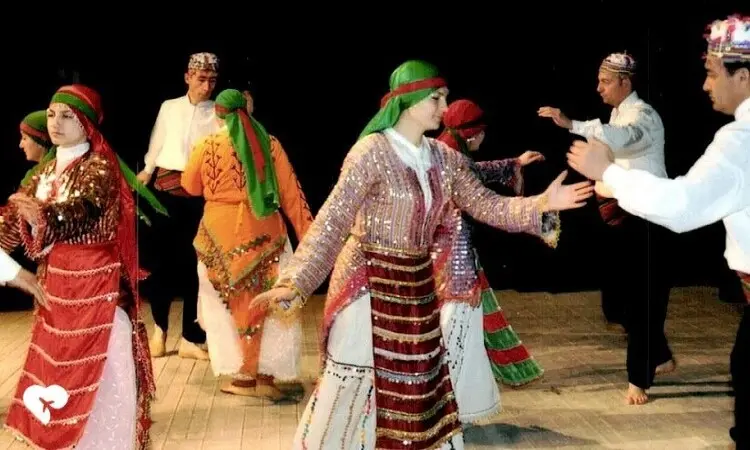
An inseparable part of the Cem is the “Semah.” Semah is a ritual turning performed to the accompaniment of the bağlama (saz) and sacred songs (deyiş). This turning symbolizes the movement of the planets in the sky and the spiritual bond between the human and the Divine. Semah is not a dance; it is the soul’s ascent to God. Additionally, the “Twelve Services” performed by twelve designated individuals ensure that the worship is conducted with discipline and reverence.
The Bardic Tradition and the Importance of the Saz
In Alevism, the bağlama (saz) is considered sacred and is often called the “Stringed Quran” (Telli Kur’an). Throughout history, the faith has been passed down through generations via the poems, breaths (nefes), and hymns of bards rather than written texts. The Seven Great Poets (Yedi Ulu Ozan—Fuzuli, Shah Ismail Hatayi, Kul Himmet, Virani, Yemini, Pir Sultan Abdal, and Seyyid Nesimi) are the architects of the Alevi world of thought. Pir Sultan Abdal’s spirit of resistance and Hacı Bektaş Veli’s peaceful philosophy have shaped the Alevi identity. This tradition, which states “The greatest book to be read is the human being,” places reason and love above all formalist patterns.
Social Equality and Women
Alevism adopts the principle of “looking upon the 72 nations with the same eye.” This means embracing all of humanity without discriminating based on religion, language, race, or sect. This universal perspective aligns Alevism with modern concepts of human rights and democracy. Gender equality is a cornerstone of this faith. Hacı Bektaş Veli’s words, “Male or female is not questioned in the language of love / Everything created by God is in its rightful place,” certify the equal status of women in both society and worship. In Alevism, a woman is a “Can” (Soul) and stands shoulder to shoulder with men in every field.
Fasting and Mourning: Muharrem and Hızır
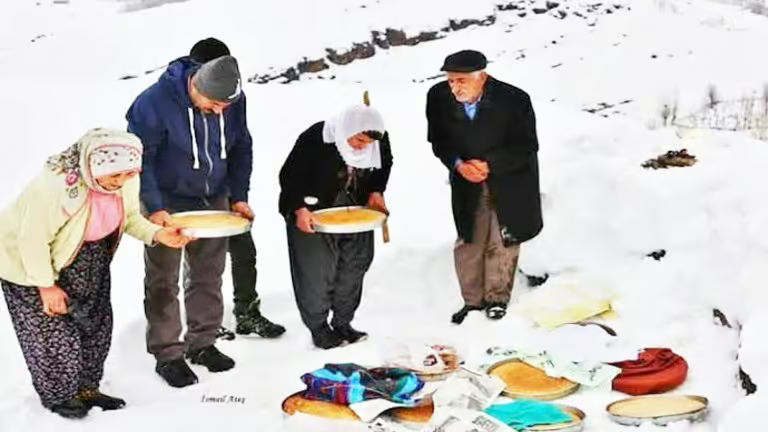
For Alevis, the month of Muharrem is a time of both mourning and purification. A 12-day fast is observed in memory of Imam Hussain and his companions who were martyred at Karbala. During this period, participants avoid drinking water (as a symbolic gesture), refrain from harming any living creature, and avoid ostentation. At the end of the fast, “Aşure” (Noah’s Pudding) is cooked and shared, symbolizing unity within diversity and gratitude for survival. Another important period is the “Hızır Fast” held in February. Hızır is regarded as the helper of those in distress, and this fast strengthens the spirit of social solidarity.
A Living Path of Humanity
Today, Alevism is an ancient teaching that emerged from the heart of Anatolia and spread to the world, defending secularism, science, art, and tolerance. Despite centuries of pressure and assimilation policies, it has succeeded in preserving its unique identity by maintaining that “The Path is greater than all” (Yol cümleden uludur). Alevism is not just a “religious interpretation”; it is a luminous path walked by those who can say “Do not hurt even if you are hurt,” those who master their hands, tongues, and loins, those who hold justice above all, and those who carry the love of humanity in their hearts.
The essence of this path is hidden in these lines by Hacı Bektaş Veli:
“Love is our religion; we believe in no other.”